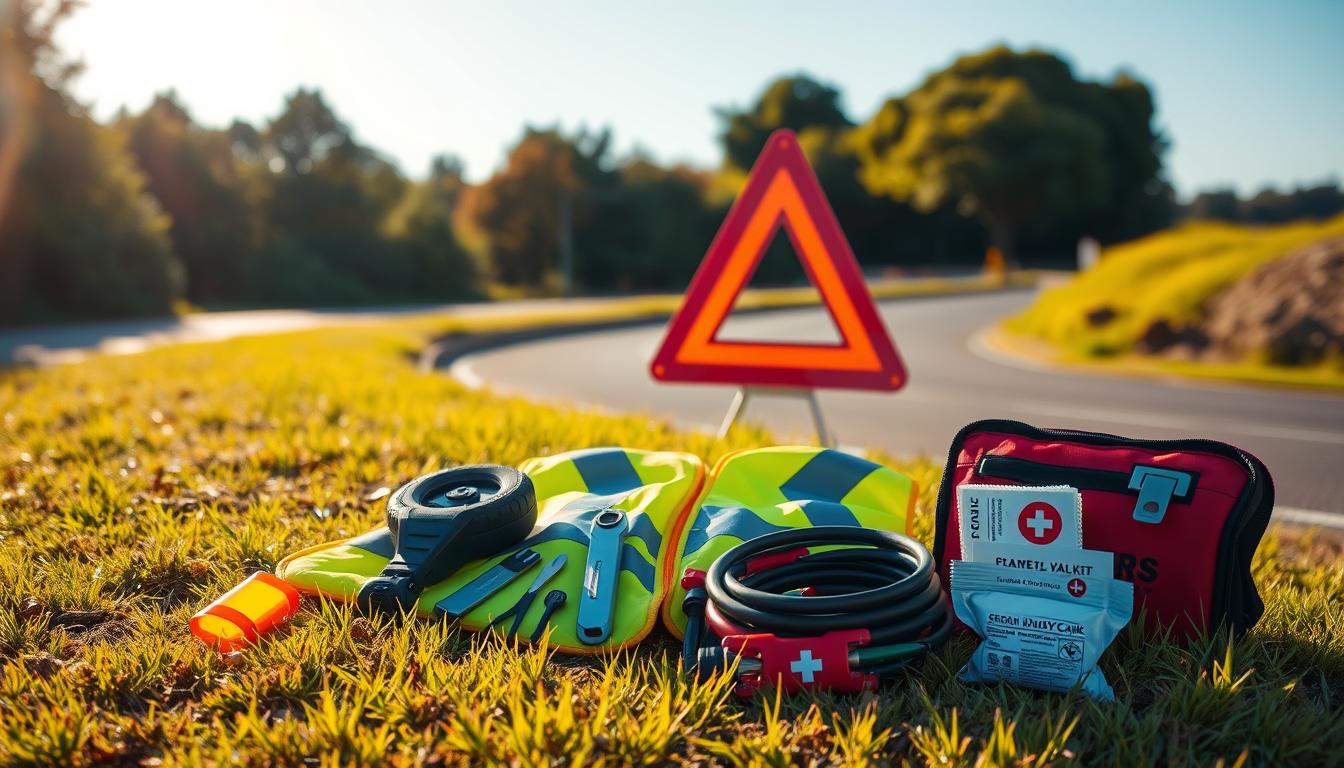
Hitting the open road brings freedom and adventure. But sometimes, unexpected things happen. A flat tire, dead battery, or sudden storm can turn a great trip into a stressful situation.
That’s where having the right gear makes all the difference. We believe every driver deserves peace of mind. Being prepared means you can handle surprises confidently and safely.
Your vehicle is more than just transportation—it’s your partner in travel. Proper preparation transforms potential emergencies into minor inconveniences. We’ve researched the best options to help you stay protected.
Whether you’re a daily commuter or long-distance traveler, having essential supplies ready is crucial. Seasonal changes and varying road conditions make a well-stocked kit valuable year-round. This small investment saves time, money, and stress when you need it most.
Key Takeaways
- Every driver should have essential safety gear in their vehicle
- Proper preparation turns potential emergencies into manageable situations
- Quality gear provides peace of mind during all types of travel
- Seasonal changes make having appropriate supplies important year-round
- A small investment in safety items can prevent major headaches later
- Both daily commuters and long-distance travelers benefit from being prepared
- Having the right tools means you can handle unexpected situations confidently
Why Every Driver Needs Roadside Emergency Kits
Imagine driving through a peaceful landscape when suddenly your dashboard lights up. Or perhaps dark clouds roll in unexpectedly during your journey. These moments remind us that travel plans can change in an instant.
We believe preparation transforms uncertainty into confidence. Having the right gear means you’re ready for whatever comes your way.
The Unexpected Nature of Highway Emergencies
Mechanical issues don’t schedule appointments. They happen when least expected. A study shows that over two million drivers experience sudden breakdowns annually.
Weather changes rapidly across different regions. Sunny skies can become dangerous conditions within miles. Having appropriate supplies means you can wait safely for conditions to improve.
Consider Sarah from Ohio. Her alternator failed during a winter trip. Because she had blankets and food, she stayed warm until help arrived. Her story shows how preparation matters.
Peace of Mind Through Preparedness
Knowing you have essential items reduces travel anxiety significantly. You can focus on enjoying the journey rather than worrying about potential problems.
This confidence extends to family trips too. Parents feel better knowing they can protect their children during unexpected delays. It’s about creating security for everyone in the vehicle.
One driver told us, “Having my kit lets me drive anywhere without second thoughts. I know I can handle minor issues myself.”
Cost Savings From Self-Sufficiency
Small investments prevent large expenses. A basic jump start service often costs over $75. Having jumper cables means you can solve this yourself for free.
Tow truck fees average $109 per hour nationally. Simple repair items can help you avoid this expense entirely. That’s money saved for your next adventure.
Hotel stays during lengthy repairs add up quickly. With food and water supplies, you can wait comfortably without additional costs.
Remember that these kits aren’t just for your benefit. They let you assist other motorists too. Helping someone change a tire or share supplies creates safer roads for everyone.
Essential Components of a Comprehensive Emergency Kit
Building your vehicle’s preparedness system requires careful thought. We believe in organizing supplies into three clear categories. This approach ensures you cover all critical needs during unexpected situations.
Think of your car as a mobile safety station. Each component serves a specific purpose when challenges arise. Proper organization means you can find what you need quickly.
Vehicle-Specific Tools and Equipment
Your car needs specialized tools for common mechanical issues. Different vehicles require different equipment. Always check your owner’s manual for specific recommendations.
Quality work gloves protect your hands during tire changes. They prevent cuts and burns from hot surfaces. Good gloves make repairs safer and more comfortable.
A multitool handles various scenarios from cutting seatbelts to minor fixes. Look for one with pliers, screwdrivers, and a sharp blade. This compact tool replaces several individual items.
Essential vehicle tools include:
- Jumper cables or compact jump starter for dead batteries
- Tire repair kit and power inflator for flat tires
- Nylon tow strap for gentle recovery situations
- Waterproof patch tape for temporary hose repairs
- Proper tire jack that fits your specific vehicle
Always practice using these tools before you need them. Familiarity builds confidence during stressful moments. Remember that proper storage prevents items from becoming hazards.
First Aid and Medical Supplies
Medical situations require immediate attention. A well-stocked first-aid kit addresses common injuries. The American Red Cross sets excellent standards for these supplies.
Your medical kit should handle cuts, burns, and sprains. Include pain relievers for sudden headaches or discomfort. Antiseptic wipes prevent infection in open wounds.
Comprehensive first-aid items include:
- Adhesive bandages in multiple sizes
- Sterile gauze pads and elastic bandages
- Antibiotic ointment and hydrocortisone cream
- Instant cold pack for swelling reduction
- Latex or nitrile gloves for protection
- Scissors and tweezers for various needs
Choose pre-made kits that meet American Red Cross guidelines. Alternatively, build your own using their recommended list. Check expiration dates regularly and replace used items.
Visibility and Safety Gear
Being seen prevents secondary accidents. Visibility gear protects you while assisting your vehicle. Reflective materials work day and night.
A Class B or C fire extinguisher handles vehicle fires. These ratings cover flammable liquids and electrical fires. Keep it accessible but secure during travel.
Critical visibility items include:
- Reflective safety vest for personal protection
- DOT-approved flares or warning triangles
- Bright flashlight with extra batteries
- Emergency whistle for attracting attention
Place warning devices 100-500 feet behind your car. This gives other drivers time to react. Always face traffic when placing safety equipment.
Remember that these supplies work together as a system. Each category supports the others during challenging situations. Regular checks ensure your gear remains ready when needed.
Top-Rated Roadside Emergency Kits Compared
Choosing the right protection for your vehicle can feel overwhelming. We’ve tested numerous options to find the best solutions for different driving needs. These three kits represent the gold standard in automotive safety.
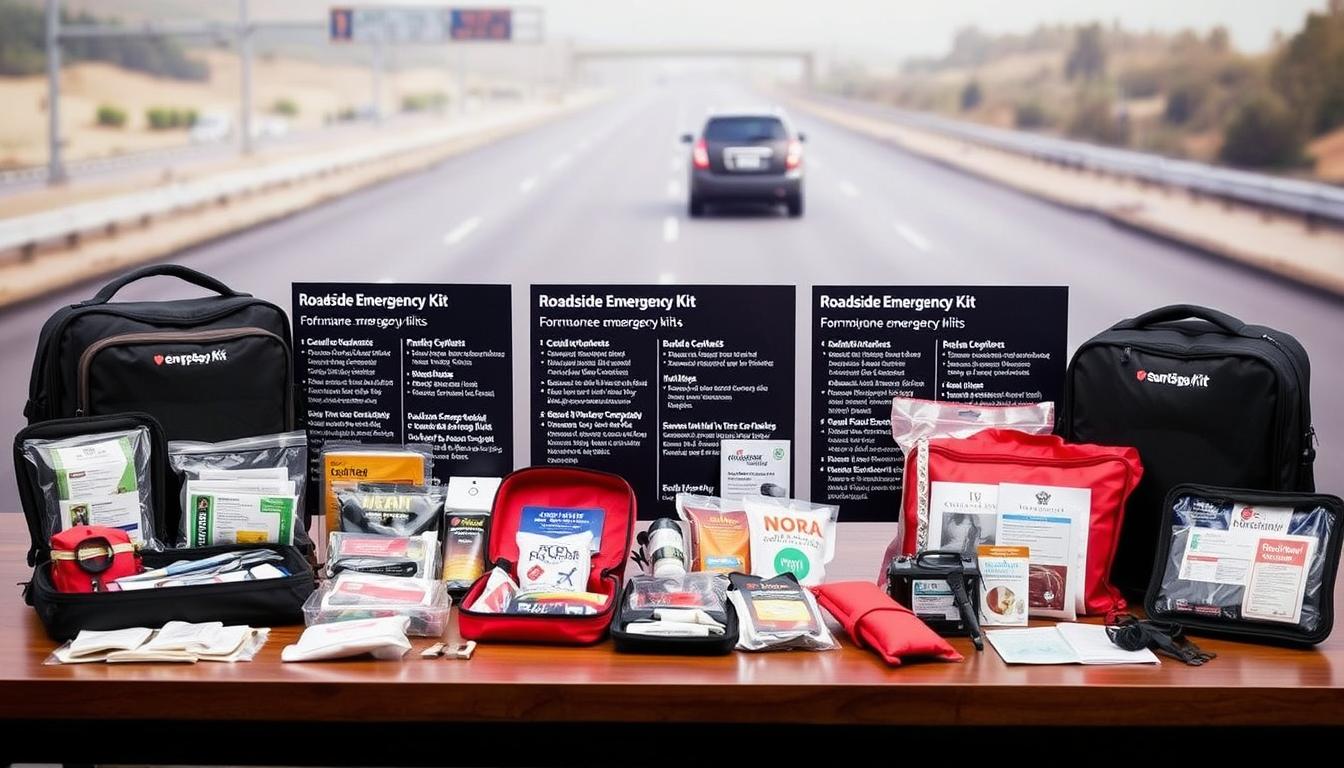
Each package serves a specific purpose. Some focus on winter survival while others prioritize medical care. Understanding these differences helps you select the perfect match for your travels.
Car Survival Kit with Winter Supplies (28 Pieces)
This comprehensive package excels in cold weather conditions. It contains 28 essential items specifically designed for winter driving challenges. Northern state drivers will appreciate its cold-weather focus.
The kit includes thermal hand warmers and insulated gloves. These keep fingers functional during tire changes in freezing temperatures. A Mylar sleeping bag and blanket provide crucial warmth if you get stuck in snow.
“Winter driving requires specialized gear that summer kits simply don’t provide. This package addresses the unique risks of cold weather travel.”
Nutrition and hydration elements include emergency food and water packets. A light stick offers illumination without battery concerns. The rain poncho adds protection against wet conditions.
This kit proves most valuable for:
- Drivers in snowy mountain regions
- Commuting during winter months
- Long trips through changing climates
- Vehicles without comprehensive heating systems
Be Red Cross Ready First Aid Kit (73 pieces)
Medical emergencies demand professional-grade supplies. This 73-piece kit meets American Red Cross standards for comprehensive care. It treats everything from minor cuts to serious sprains.
The certification means everything inside meets strict quality guidelines. Each component addresses specific medical situations effectively. You get peace of mind knowing the contents actually work when needed.
This extensive medical package includes:
- Multiple bandage sizes for various wounds
- Antiseptic wipes and antibiotic ointment
- Instant cold packs for swelling reduction
- Burn relief pads and sting relief wipes
- First aid guide for proper treatment
Families with children particularly benefit from this kit. School sports trips and weekend adventures become safer. The comprehensive approach makes it ideal for group travel.
Deluxe 3-Day Emergency Preparedness Kit (52 pieces)
Some situations require extended self-sufficiency. This 52-piece kit supports three days of independent survival. It’s approved by the American Red Cross Scientific Advisory Council.
Remote travelers and adventure seekers will appreciate this robust package. It contains sufficient food, water, and supplies for prolonged emergencies. The contents address both immediate and ongoing needs.
This kit shines during:
- Cross-country road trips
- Travel through isolated areas
- Natural disaster evacuation scenarios
- Extended vehicle breakdown situations
We recommend this option for professional drivers and frequent travelers. Its comprehensive nature provides exceptional value for those covering long distances regularly.
| Feature | Winter Kit | First Aid Kit | 3-Day Kit |
|---|---|---|---|
| Total Pieces | 28 | 73 | 52 |
| Primary Focus | Cold Weather Survival | Medical Emergencies | Extended Self-Sufficiency |
| Ideal For | Snowy Regions | Families & Groups | Remote Travel |
| Certification | Winter Safety Standards | American Red Cross | American Red Cross |
| Unique Value | Cold-Specific Gear | Medical Comprehensiveness | 72-Hour Sustainability |
Pre-made kits offer convenience and guaranteed quality. However, building your own allows customization. We suggest using these professional examples as templates for personal kits.
Your driving habits determine the best choice. Daily commuters might prefer the first aid focus. Winter drivers need cold weather protection. Adventure seekers require extended survival capabilities.
Remember that quality matters more than quantity. Better to have fewer reliable items than numerous questionable ones. Invest in kits from reputable manufacturers with proven track records.
AAA-Recommended Emergency Kit Essentials
We believe in learning from experts who handle thousands of car situations yearly. AAA’s recommendations come from real-world experience helping drivers nationwide. Their list represents the most practical items for actual on-road challenges.
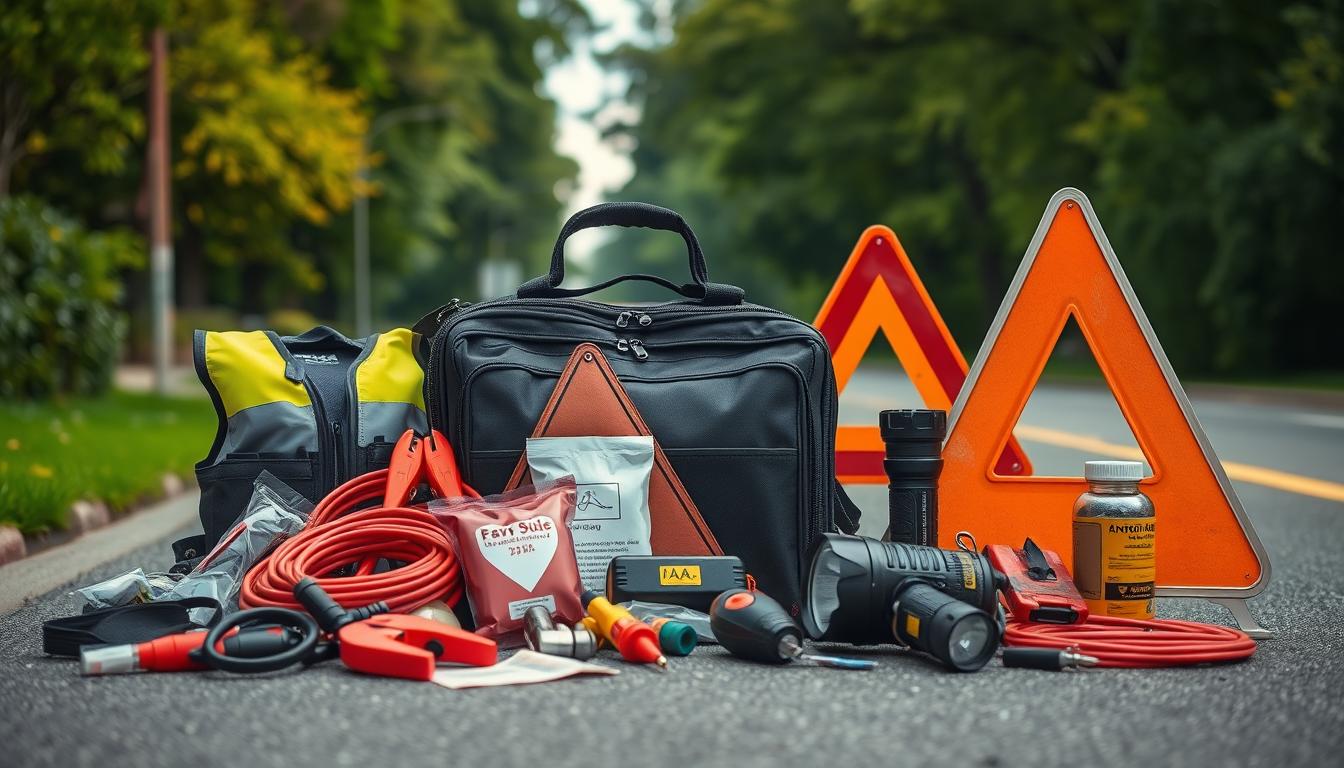
These suggestions focus on both immediate fixes and extended waiting periods. They cover mechanical issues, personal needs, and unexpected weather changes. Following these guidelines creates comprehensive protection for your travels.
Vehicle Breakdown Preparedness Items
AAA emphasizes tools that address common mechanical problems. Their list includes items for quick fixes and safety while working. These supplies help you handle situations while waiting for assistance.
Essential vehicle items include:
- Cell phone car charger for constant communication
- Flashlight with extra batteries for nighttime visibility
- Reflective triangles to alert other drivers
- Jumper cables for dead battery situations
- Tire inflator and repair kit for flat tires
They recommend keeping these tools accessible but secure. Proper storage prevents items from becoming hazards during sudden stops. Regular checks ensure everything works when needed.
Emergency Evacuation Grab-Bag Components
Some situations require leaving your vehicle quickly. AAA’s grab-bag concept prepares for these scenarios. This ready-to-go package contains survival essentials for immediate departure.
Critical grab-bag items include:
- One gallon of water per person for three days
- Non-perishable snacks and manual can opener
- Personal medications and basic medical supplies
- Copies of important paperwork in waterproof bag
- Small bills and quarters for vending machines
- Dust mask for air quality protection
- Utility knife for various needs
Store this bag where you can reach it quickly. Update contents seasonally and check expiration dates monthly. This preparation ensures you can focus on safety rather than gathering supplies.
AAA Member Benefits and Resources
Membership provides valuable support alongside personal preparation. AAA offers 24/7 assistance through their toll-free number. Services include towing, battery jumps, and lockout assistance.
“Even with comprehensive personal kits, professional support provides additional security. Our members appreciate having both options available.”
Members receive trip planning resources and weather alerts. They also get discounts on hotels during extended repairs. These benefits complement rather than replace personal preparation.
We recommend maintaining your kit even with AAA membership. Sometimes help arrives later in remote areas. Your supplies keep you comfortable during waiting periods.
| Preparation Level | Personal Kit Items | AAA Services | Combined Benefit |
|---|---|---|---|
| Basic Readiness | Flashlight, phone charger | Towing, jump starts | Immediate aid + communication |
| Extended Wait | Water, snacks, blanket | Hotel discounts | Comfort during repairs |
| Severe Weather | Ice scraper, warm clothing | Weather alerts | Safety information + protection |
| Medical Needs | Medications, first-aid supplies | Transport to medical facilities | Complete health coverage |
| Documentation | Paperwork copies | Membership verification | Simplified assistance process |
Organize your supplies based on AAA’s accessibility recommendations. Keep most-used items within easy reach. Less frequently needed things can stay in trunk compartments.
Remember that preparation adapts to your specific travel patterns. Urban commuters need different items than rural travelers. AAA’s list provides a solid foundation for all drivers.
Seasonal Considerations for Your Emergency Kit
Your vehicle’s preparedness needs change with the seasons just like your wardrobe does. We believe smart drivers adapt their safety gear to match weather conditions and travel patterns. This approach ensures you’re always ready for whatever the road brings.
Think of your car’s emergency supplies as living systems that evolve throughout the year. Summer heat demands different solutions than winter cold. Regular updates keep your protection current and effective.
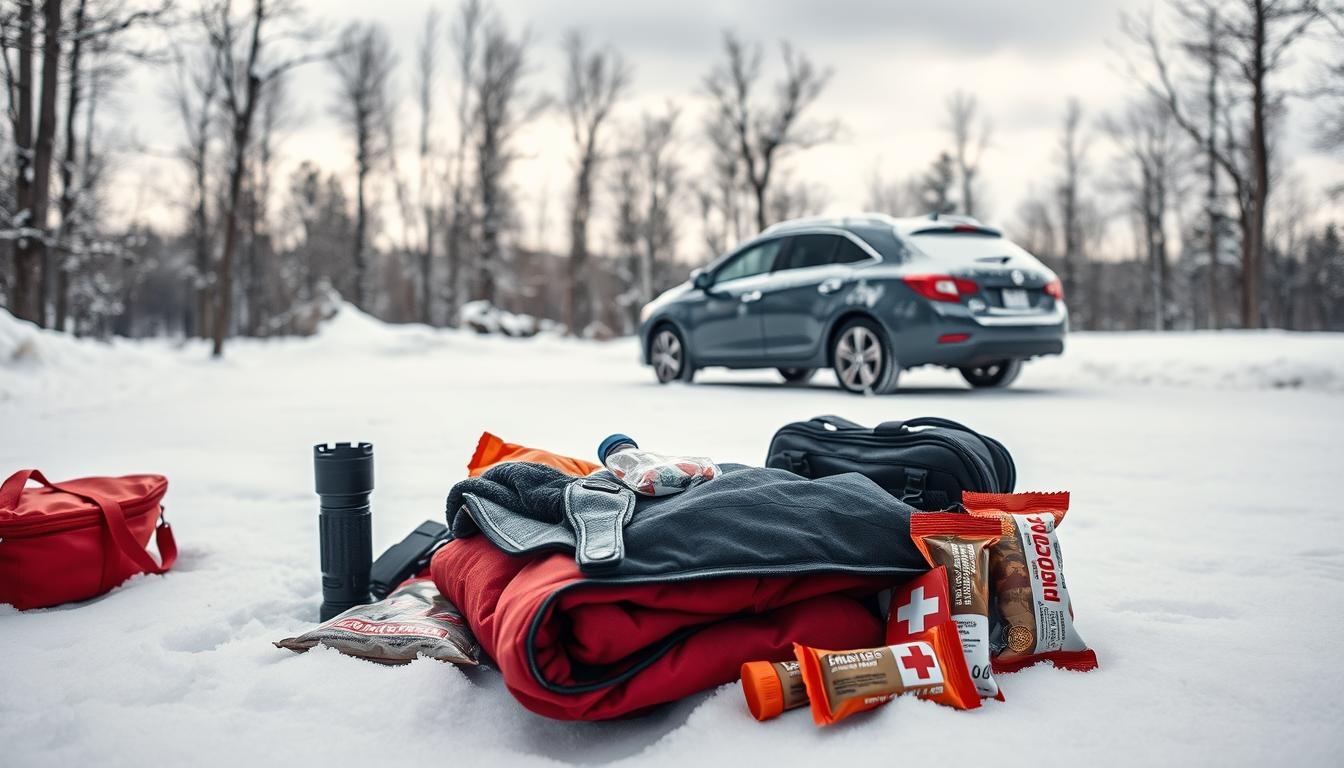
Winter Weather Additions and Modifications
Cold months bring unique challenges that require specialized gear. Thermal protection becomes critical when temperatures drop. Your standard supplies need winter-specific enhancements.
Add a heavy-duty blanket rated for sub-zero conditions. Hand warmers provide instant heat during tire changes. Thermal gloves keep fingers functional in freezing weather.
Sand or kitty litter creates traction on icy surfaces. Spread it around drive wheels if you get stuck. This simple trick often prevents needing a tow.
Essential winter additions include:
- Ice scraper and snow brush for visibility
- Windshield washer fluid rated for freezing temperatures
- Extra warm clothing and waterproof boots
- High-energy snacks that won’t freeze solid
- Portable shovel for snow removal
Warmer Month Essentials and Adjustments
Summer travel introduces heat-related risks that winter doesn’t present. Hydration becomes your top priority during hot months. Your kit should focus on heat management and sun protection.
Increase water supplies to one gallon per person daily. Temperature-resistant snacks prevent spoilage. A wide-brimmed hat protects against sun exposure.
Rain gear handles sudden summer storms. Insect repellent keeps bugs away during repairs. These simple items make waiting for help more comfortable.
Warm weather modifications include:
- Light-colored clothing for heat reflection
- Extra coolant and engine oil for overheating prevention
- Sun protection for windows during extended stops
- Battery-powered fan for air circulation
- Electrolyte supplements for hydration maintenance
Pet Safety During Seasonal Travel
Our furry companions face different seasonal challenges than humans. Pets need specialized protection during car travel. Their safety items differ from standard human supplies.
Protective paw wear shields against hot pavement in summer. In winter, it prevents ice buildup between toes. Collapsible water bowls ensure proper hydration year-round.
Pet-specific first aid ointments address animal injuries. Itch relief sprays soothe seasonal allergies. Proper bedding provides comfort during all weather conditions.
Essential pet safety items include:
- Temperature-appropriate bedding and blankets
- Pet-safe sunscreen for light-colored animals
- Extra food and medications with clear dosage instructions
- Recent photos and medical records in waterproof bags
- Harness and leash for safe vehicle exits
Rotate seasonal items every three months to keep your kit current. Store off-season supplies in clearly labeled containers. This system ensures everything stays organized and accessible.
Create a quarterly checklist to review your gear. Check expiration dates and functionality. This routine maintenance keeps your protection reliable when needed most.
Remember that proper preparation adapts to changing conditions. Your vehicle’s safety depends on current, appropriate supplies. Seasonal adjustments provide peace of mind throughout the year.
First Aid Preparedness for Roadside Emergencies
Medical situations can happen anywhere, including during your travels. We believe proper medical preparation transforms scary moments into manageable situations. Having the right medical supplies means you can provide immediate care when it matters most.
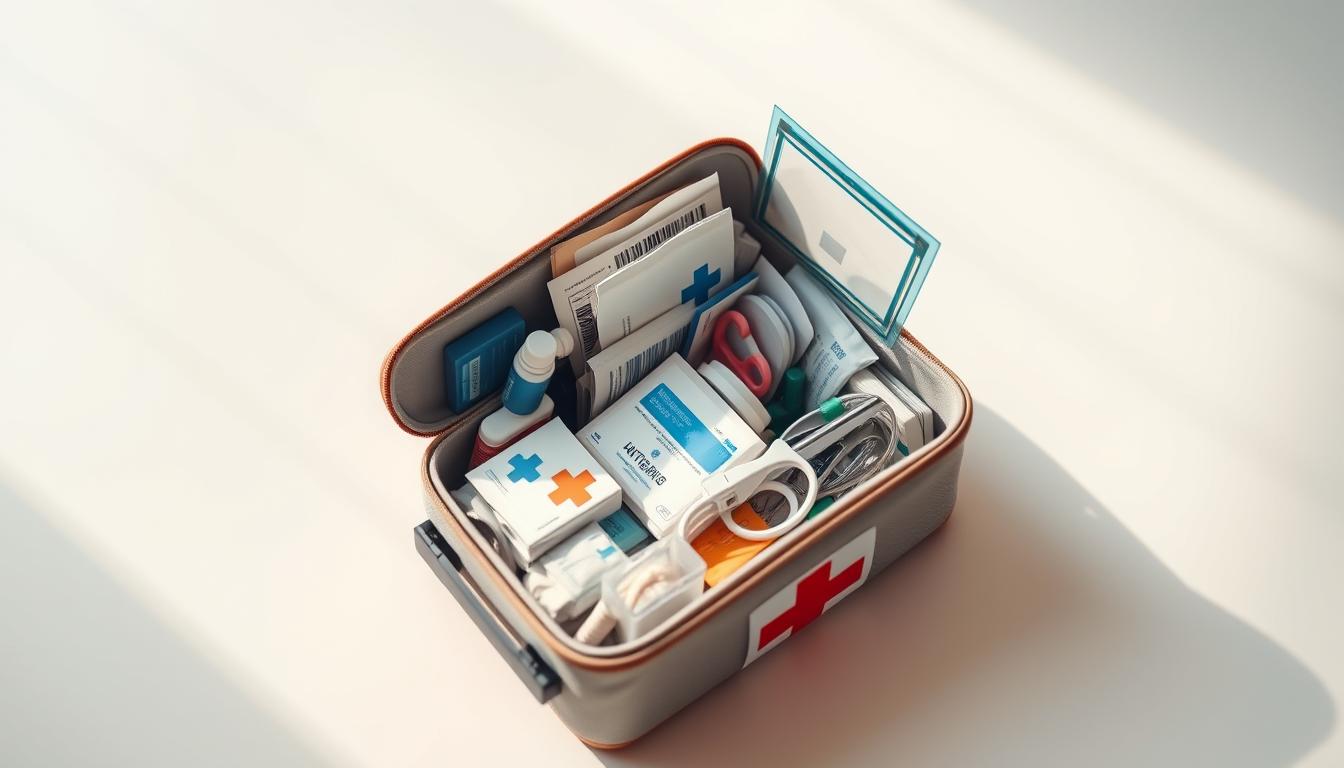
Essential First Aid Kit Components
Your vehicle’s medical supplies should address common travel injuries. Each item serves a specific purpose during unexpected health situations. Quality components make treatment effective and comfortable.
Adhesive bandages handle minor cuts from sharp objects. Choose various sizes for different wound types. They protect against infection while promoting healing.
Sterile gauze pads manage more serious bleeding situations. Elastic bandages provide support for sprains or strains. These items stabilize injuries until professional help arrives.
Antibiotic ointment prevents infection in open wounds. Antiseptic wipes clean affected areas before treatment. Hydrocortisone cream soothes skin irritations from plants or chemicals.
Essential medical items include:
- Instant cold pack for swelling reduction
- Latex or nitrile gloves for protection
- Pain relievers for headaches or discomfort
- Scissors for cutting bandages or clothing
- Tweezers for removing splinters or debris
Medical Emergency Response Basics
Knowing basic procedures makes your supplies more effective. Simple actions can prevent minor issues from becoming major problems. We recommend learning these fundamental skills.
Always assess the situation for safety first. Ensure your vehicle is secure before providing care. Use hazard lights and warning devices for protection.
Control bleeding with direct pressure using gauze. Elevate injured areas when possible. Keep the person calm and comfortable during treatment.
For burns, cool the area with clean water. Cover with sterile gauze to prevent infection. Never use ice directly on burned skin.
Basic response steps include:
- Ensure scene safety for everyone involved
- Check responsiveness and breathing
- Control severe bleeding immediately
- Treat for shock by keeping person warm
- Call for professional medical assistance
American Red Cross Approved Kits
Certification ensures your medical supplies meet strict quality standards. The American Red Cross sets comprehensive guidelines for emergency care. Their approval means every component works effectively when needed.
The Be Red Cross Ready First Aid Kit contains 73 essential pieces. It addresses everything from minor cuts to serious sprains. Families particularly benefit from its comprehensive approach.
The Deluxe 3-Day Emergency Preparedness Kit supports extended situations. It includes medical supplies alongside food and water. This option works well for remote travel or natural disasters.
“Red Cross approval means every item meets rigorous testing standards. You can trust these supplies to perform when seconds count.”
Both kits include clear instructions for proper use. They organize supplies for quick access during stressful moments. Regular maintenance ensures components remain effective over time.
Check expiration dates every six months. Replace used items immediately after any incident. Store your medical supplies in temperature-stable conditions.
Consider additional first aid training for enhanced skills. Many organizations offer short courses specifically for travelers. This knowledge complements your prepared supplies perfectly.
Remember that proper medical preparation provides peace of mind. You’ll feel confident handling health situations during your journeys. Quality supplies and basic knowledge make all the difference.
Technology and Communication Tools for Emergencies
Modern travel demands smart solutions for staying connected and informed. We believe technology enhances traditional safety gear with real-time information and reliable communication. These tools provide critical advantages during challenging situations on the road.
Your vehicle’s technology suite should address three key areas: information access, illumination, and power management. Each category supports the others during unexpected events. Proper selection ensures you remain prepared for various scenarios.
Emergency Radios and Weather Alerts
Traditional AM/FM radios provide entertainment, but emergency models offer much more. Modern units receive weather band alerts and NOAA broadcasts. These devices deliver crucial storm warnings and traffic updates.
Many emergency radios feature smartphone charging via USB ports. They often include bright LED flashlights for visibility. Hand crank options eliminate battery dependency during extended events.
We recommend the Emergency Hand Crank Weather Alert Radio with LED Flashlight. This versatile tool handles multiple needs simultaneously. It keeps you informed while providing light and charging capabilities.
“Weather alert radios provide advance notice of changing conditions that mobile apps might miss. This early warning can make all the difference in travel safety.”
Place your radio where it’s easily accessible but secure during normal driving. Test reception in different areas before needing it urgently. Regular checks ensure it remains functional when required.
Flashlights and Power Solutions
Illumination needs vary based on situation and duration. Traditional battery-powered lights work well for quick tasks. Alternative options provide reliability when batteries fail.
The Blackout Buddy Color Emergency Flashlight serves as both light source and nightlight. Its energy-efficient design provides extended illumination. Multiple color options aid in different emergency scenarios.
Hand crank models eliminate battery concerns entirely. These devices generate power through manual operation. They’re perfect for extended situations where battery replacement isn’t possible.
Solar-powered options work well for drivers in sunny regions. They recharge during normal travel and provide backup power. Each technology suits different travel patterns and environments.
Phone Charging and Communication Backups
Mobile phones are your primary connection to assistance. Keeping them powered becomes critical during extended events. Multiple charging methods ensure you maintain communication.
Portable power banks provide several full phone charges. Look for units with high capacity and multiple output ports. These devices work independently of your vehicle’s electrical system.
Vehicle-based chargers plug into cigarette lighters or USB ports. They provide continuous power while driving. Always keep compatible cables in your vehicle.
Alternative charging methods include solar panels and hand cranks. These options work when traditional power sources fail. They’re particularly valuable during multi-day events.
Communication backups include two-way radios for areas without cell service. Pre-program emergency numbers into your phone’s speed dial. These preparations ensure you can reach help when needed.
Test all electronic components quarterly to ensure functionality. Store devices in temperature-stable conditions to preserve battery life. Regular maintenance keeps your technology ready for action.
Remember that technology complements rather than replaces traditional safety items. A balanced approach provides the most comprehensive protection. Your investment in smart tools pays dividends during challenging moments.
Preventative Maintenance and Vehicle Safety
Smart driving begins long before you turn the key. We believe the best way to handle car troubles is to prevent them from happening. Regular care keeps your vehicle running smoothly and reduces unexpected surprises.
Your owner’s manual contains the perfect maintenance schedule for your specific model. Following these guidelines helps avoid most common issues. Think of it as your vehicle’s personal health plan.
Routine Maintenance to Avoid Emergencies
Simple checks can prevent major problems down the road. We recommend creating a monthly inspection routine. This takes minutes but provides months of protection.
Check tire pressure every two weeks and before long trips. Proper inflation improves fuel efficiency and prevents blowouts. Keep a quality tire inflator in your car for adjustments.
Monitor battery health seasonally, especially before winter. Clean terminals prevent starting issues. Having jumper cables provides backup for unexpected power loss.
Essential monthly checks include:
- Fluid levels: oil, coolant, brake, and transmission
- Light functionality: headlights, brake lights, and turn signals
- Wiper blade condition for clear visibility
- Brake performance and unusual noises
- Tread depth and overall tire condition
Recall Checks and Vehicle Safety Monitoring
Manufacturers occasionally discover safety issues after vehicles leave factories. The National Highway Traffic Safety Administration tracks these concerns. Their database helps drivers stay informed about potential risks.
Use the NHTSA’s VIN lookup tool to check for outstanding recalls. This free service covers safety issues from the past 15 years. Sign up for email alerts at NHTSA.gov/Alerts for new notifications.
“Unaddressed recalls can create dangerous situations on the road. Checking regularly ensures you’re driving the safest vehicle possible.”
Dealers handle recall repairs at no cost to owners. They complete necessary fixes using genuine parts. This service protects both your safety and your investment.
Professional Inspection Recommendations
While personal checks are valuable, professional eyes catch hidden issues. We suggest comprehensive inspections at key mileage intervals. These thorough examinations prevent small problems from becoming big ones.
Newer vehicles benefit from annual inspections. Older cars might need semi-annual checkups. High-mileage vehicles require more frequent professional attention.
Choose technicians certified by ASE (Automotive Service Excellence). These professionals meet industry standards for knowledge and skill. They use proper diagnostic equipment for accurate assessments.
Inspection frequency guidelines:
| Vehicle Age | Recommended Frequency | Key Focus Areas |
|---|---|---|
| 0-3 years | Annual inspection | Warranty items, factory recommendations |
| 4-7 years | Every 9 months | Wear items, fluid condition, brake wear |
| 8+ years | Every 6 months | Complete systems check, potential failures |
| High mileage (100k+) | Every 4 months | Exhaust system, transmission, engine health |
Maintenance complements your emergency supplies perfectly. Prevention means you’ll use your safety gear less often. Both approaches work together for complete protection.
Keep records of all services and inspections. This documentation helps mechanics understand your vehicle’s history. It also maintains your car’s value over time.
Remember that consistent care provides peace of mind on every trip. Your vehicle rewards attention with reliability and safety. Smart maintenance makes driving enjoyable for years to come.
Conclusion: Your Path to Highway Safety and Preparedness
Your journey toward confident driving starts with smart preparation today. We believe every car should carry essential safety gear for peace of mind.
Quality tools and supplies transform potential stress into manageable situations. Regular maintenance keeps your protection current through all seasons.
This small investment pays dividends in safety and confidence. Review your vehicle’s preparedness level and make improvements now.
Proper preparation turns every trip into a secure adventure. We’re here to help you stay safe on the road with quality equipment and expert guidance.
FAQ
What should I include in a basic car emergency kit?
We recommend starting with jumper cables, a first-aid kit, a flashlight, a tire inflator or sealant, water, non-perishable snacks, gloves, and basic tools. These items help handle common issues like a dead battery or flat tire.
How often should I check or update my vehicle’s emergency supplies?
It’s smart to review your kit every six months. Replace expired items like water and medications, and adjust for seasonal needs—adding blankets in winter or extra water in summer.
Are pre-made kits from brands like the American Red Cross a good value?
A> Yes, kits like the American Red Cross options are often well-organized and include essential medical and safety items. They save time and ensure you don’t overlook important supplies.
What’s the best way to handle a flat tire if I’m stranded?
Keep a tire inflator or sealant in your kit for temporary fixes. Always pull over safely, turn on hazards, and call for help if needed. Regular tire maintenance reduces this risk.
Should I add pet supplies to my car emergency kit?
A> Absolutely. Include extra water, a leash, pet food, and a blanket if you travel with animals. Their safety is just as important during a breakdown or severe weather.
Can a good emergency kit really save me money?
A> Definitely. Handling small issues yourself—like jumping a battery or inflating a tire—can avoid costly towing or service calls. Plus, being prepared keeps you safer on the road.
About the Author